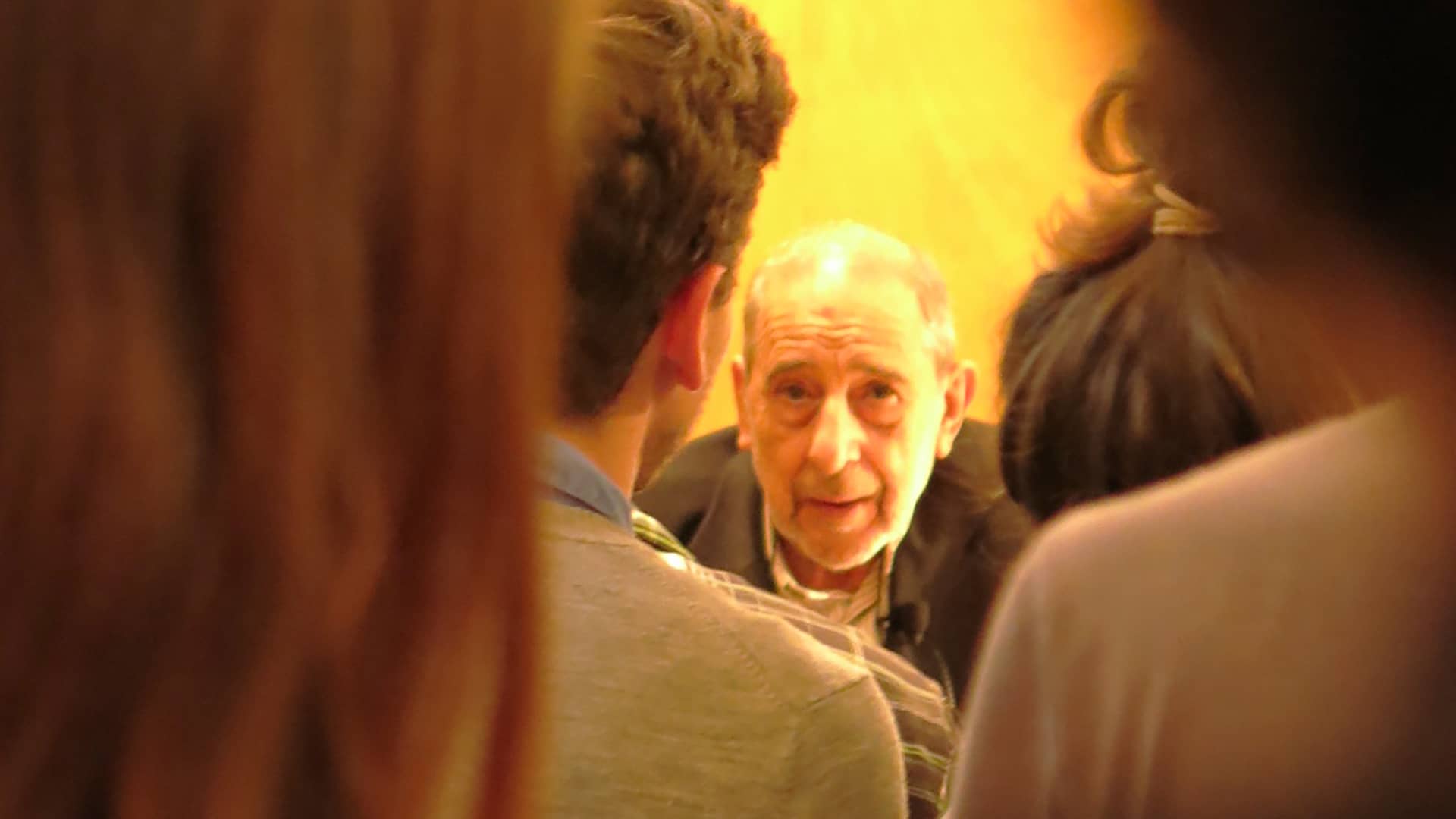
FAUP hosted Porto Academy from the 20th to the 27th July 2013. The academy consisted of a weeklong workshop and lectures with Alexandre Alves Costa, Álvaro Siza, ASBR, Anne Holtrop, Baukuh, Camilo Rebelo, Eduardo Souto Moura, Go Hasegawa, Marcos Acayaba, MMBB, Nuno Brandão Costa, Pascal Flammer, Raphael Zuber, Serôdio Furtado and 51N4E.

Hosts

Faculdade de Arquitectura da Universidade do Porto

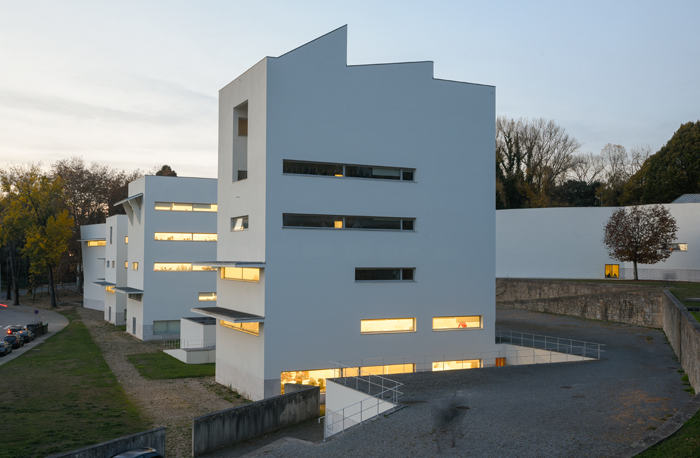
‘The Faculty of Architecture of the University of Porto (FAUP) works on a building designed by Álvaro Siza. “Porto school”, as it is internationally recognized, it’s a worldwide reference in Architecture graduation. On this institution, many awarded and published architects have studied and taught. Fernando Távora, Álvaro Siza, Nuno Portas, Alexandre Alves Costa, Domingos Tavares and Eduardo Souto Moura are some of the greatest examples of the pedagogic, scientific and artistic abilities of Porto school.’

by José Manuel Rodrigues, Director of FAUP master degree in Architecture

sigarra.up.pt/faup/pt/web_page.Inicial
Studios

51N4E

51N4E is rooted in Europe, where comfort slows down change. In the face of a democratic and ecological deficit, transformation happens here in a space that is already occupied by multiple and often parallel realities. In this context, 51N4E uses design to help overcome opposition and create integrated value and new experiences.
51N4E is a self-steering collective that wants to empower people to be both autonomous and connected. It does so by organizing the supportive processes needed for a collaborative design culture. This collaboration platform combines the internal studios with a growing network of external partners. As such, it mirrors today’s complex reality and produces an ecosystem of knowledge.

51n4e.com

Alexandre Alves Costa

Portuguese architect Alexandre Vieira Pinto Alves Costa was born in Porto in 1939 and graduated in Architecture from ESBAP – Escola Superior de Belas-Artes do Porto in 1966.
After an internship at LNEC – Laboratório Nacional de Engenharia Civil (National Civil Engineering Laboratory), he dedicated himself to his career as a freelance professional from 1970 onwards.
Since 1972 he has been teaching at ESBAP, in the subjects of Design and History of Architecture, becoming a Full Professor at FAUP – Faculty of Architecture of the University of Porto, in 1996, having been a member of the Faculty’s Installation Committee as Chairman of the Board of Directors. He has also been a member of the Faculty of Science and Technology of the University of Coimbra since 1991.
He has taken part in various courses, seminars, round tables and conferences in Portugal, Spain, Italy, France, Holland, Angola, Brazil and Canada, mainly on topics related to the teaching and history of architecture.
He dedicates a large part of his time to teaching and research in the field of the History and Theory of Architecture, resulting in a large part of his work being co-authored with various architects, including Sérgio Fernandez and Camilo Cortesão.
Between 1974 and 1976, he worked with the Coordinating Committee of SAAL/Norte (Serviço Ambulatório de Apoio Local), being responsible for the Planning and Project Support sector. SAAL was a project carried out in the post-25 April period which, through commissions made up of multidisciplinary teams (architects, sociologists, among others), supported residents’ associations with the aim of improving their living conditions, seeking self-building, given the scarcity of resources, paying particular attention to the references and needs of each group of people.

Anne Holtrop

Anne Holtrop (b. 1977, Netherlands) started his own architectural practice in 2009. Currently, the studios are based in Amsterdam, Netherlands, and Muharraq, Bahrain. In 2015, the first two major buildings designed by the Studio, Museum Fort Vechten and the National Pavilion of the Kingdom of Bahrain, were completed.
The Studio is currently working on new stores worldwide for Maison Margiela with the first one due to open on Bruton Street, London this year; an exhibition pavilion for CERN in France, and several UNESCO-listed heritage buildings in Bahrain: Murad Boutique Hotel, Siyadi Pearl Museum and the Qaysariya Suq.
Anne Holtrop is currently an associate professor at ETH Zurich. In 1997, Holtrop received the Prince Bernhard Cultural Foundation’s Charlotte Köhler Prize for Architecture. In 2016, he was awarded the Iakov Chernikhov International Prize and the 2G monograph series dedicated its 73rd issue to Studio Anne Holtrop in the same year.

anneholtrop.nl

ASBR

Architecture Studio Boenders Raynaud (ASBR) was founded in 2021 by Marie Boenders and Thomas Raynaud. Based in Paris, ASBR develops public and private projects in France and Europe. Their work focuses on the transformative process of built situations by defining frameworks open to singularities. Thomas currently teaches at the ENSA Versailles.

asbr.co

Baukuh

Baukuh was founded in 2004 and it is based in Milan.
Baukuh produces architecture. ?Designs are independent of personal taste. No member of baukuh is ever individually responsible for any single project, each of which Is the product of the office as a whole. Working without a hierarchical structure or a stylistic dogma, baukuh produces architecture out of a rational and explicit design process. This process is based on a critical understanding of the architecture of the past. The knowledge encoded in the architecture of the past is public, and starting from this public knowledge, any architectural problem can be solved.
baukuh is: Paolo Carpi (1974), Vittorio Pizzigoni (1975), Giacomo Summa (1976), Pier Paolo Tamburelli (1976) and Andrea Zanderigo (1974).
Baukuh completed the House of Memory in Milan in 2015 and the flagship store of the Poretti Brewery in Induno Olona in 2019. Its current projects include the restoration of the Seminar School in Hoogstraten and the master plan for the Pupillen Site in Aalst (both in Belgium), and the strategic plan for the Student City of Tirana (Albania). Baukuh won international architecture and urban design competitions (Amsterdam 2003, Budapest 2003, Pavia 2006, Genoa 2009, Torino 2010, Hoogstraten 2013, Tirana 2015, Aalst 2016), and curated exhibitions (Padua 2006, Monte Carlo 2015, Milan 2015). baukuh took part in the Rotterdam Biennale (2007 and 2011), in the Istanbul Biennial (2012), in the Venice Biennale (2008 and 2012), in the Lisbon Triennale (2016) and in the Chicago Biennial (2015 and 2017). baukuh published “Two Essays on Architecture” (Genoa, 2012 and Zurich 2014) and “Casa della memoria” (Milan, 2016).
Baukuh has been awarded the honourable mention of the Fritz Höger Preis (2017) and was nominated for the Mies van der Rohe Award (2017), the Golden Medal of Italian Architecture (2016 and 2012), the Zumtobel Group Award, the Iakov Chernikov International Prize (2008 and 2006). baukuh received the Idea Tops Award

baukuh.it

Camilo Rebelo

Camilo was born in Porto in 1972. He studied at the Colégio Alemão do Porto [German College] and graduated from the Faculty of Architecture of the University of Porto in 1996. He worked with Eduardo Souto Moura between 1994/98 and with Herzog & de Meuron between 1998/99.
He started his activity in Porto in 2000 and since then he has created about a hundred projects, some of them in partnership with Tiago Pimentel, Susana Martins, Cristina Chicau and Patrício Guedes.
He has taught at the Faculty of Architecture and Faculty of Arts and Humanities of the University of Porto, École Polytechnique Fédérale de Lausanne (EPFL), Escuela Técnica Superior de Arquitectura de la University of Navarra (ETSAUN), and the Accademia di Architettura di Mendrisio. Since 2014 he has had a research studio, Arquitetura e Paisagem [Architecture and Landscape], in the Politecnico di Milano.
His work has been recognised through several national and international awards including the Bauwelt Award, Baku UIA Award and Douro Valley Award, as well as nominations for the SECIL Award, BSI Swiss Prize and EU Mies Award. The Ktima house was chosen by BBC2 to feature in a documentary series called The World’s Most Extraordinary Homes (Underground).
His area of research has mostly been concerned with the relationship between architecture and nature, linking urban contexts and areas of protected and classified natural landscape. The subject matter, its atmosphere, its constructive processes and the urgency of its uses in each context have been recognised in Portugal and abroad.

camilorebelo.com

Eduardo Souto Moura

Eduardo Souto de Moura was born in Porto, Portugal in 1952.
Following his early years at the Italian School, Souto de Moura enrolled in the School of Fine Arts in Porto, where he began as an art student, studying sculpture, but eventually achieving his degree in architecture. He credits a meeting with Donald Judd in Zurich for the switch from art to architecture. While still a student, he worked for architect Noé Dinis and then Álvaro Siza, the latter for five years. While studying and working with his professor of urbanism, Architect Fernandes de Sá, he received his first commission, a market project in Braga which has since been demolished because of changing business patterns.
He is frequently invited as a guest professor to Lausanne and Zurich in Switzerland as well as Harvard in the United States. These guest lectures at universities and seminars over the years have afforded him the opportunity to meet many colleagues in the field, among them Jacques Herzog and Aldo Rossi.
Along with his architecture practice, Souto de Moura was a professor at the University of Oporto, and visiting professor at Geneva, Paris-Belleville, Harvard, Dublin and the ETH Zurich and Lausanne.
He won the Pritzker Prize in 2011.

Go Hasegawa

Go Hasegawa earned a Master of Engineering degree from the Tokyo Institute of Technology in 2002 and worked at Taira Nishizawa Architects before establishing Go Hasegawa & Associates in 2005. He has taught at Tokyo Institute of Technology, the Academy of Architecture of Mendrisio, Oslo School of Architecture and Design, UCLA and GSD Harvard. In 2015, he received his PhD in Engineering from the Tokyo Institute of Technology. Hasegawa is the recipient of numerous awards, including the 2008 Shinkenchiku Prize and selection as one of the ten 2014 AR Design Vanguard architects. It has ever been published several monographs about his works from TOTO publisher, a+u and El Croquis.

ghaa.co.jp

Marcos Acayaba

Born in São Paulo in 1944. From 1964 to 1969 studied at FAUUSP (Architecture and Urban Planning School of the University of São Paulo), from which he obtained a doctor’s degree in 2005.
Project Professor at FAUUSP from 1972 to 1976, and since 1994.

marcosacayaba.arq.br/lista.home.chain

MMBB

MMBB Architects came about in 1991 as a result of the association of the architects Fernando de Mello Franco, Marta Moreira and Milton Braga. Previous experience provided by their capacities as collaborators in Brazilian and foreign companies was gathered in one common organization, consolidating a comprehensive professional performance which has stood out by the development of public and institutional designs in the area of building and urbanism.
The designs, carried out sometimes in the form of different associations and collaborations with several architects and engineering consultancy companies, have allowed for the organization of a multidisciplinary activity which is needed taking into account the comprehensiveness and complexity of the works accomplished.
The association with engineering consultancy companies has been characterized by the development of infrastructure urban designs such as bus station terminuses and corridors, underground garage, highway toll places, pedestrian walkways, etc.
The continuous collaboration with the architect Paulo Mendes da Rocha since 1995, in its turn, offers the opportunity to develop large scale designs to institutional and governmental bodies intended to cultural and educational activities and buildings to cater for the sector of services.
The concern with a critical and analytical posture has led MMBB architects to extend their activities to the cultural and academic sphere. Not only do the associates carry out a parallel production in the way of participation and/or organization of cultural events, exhibitions, biennials but also develop an academic activity encompassing teaching and research.

mmbb.com.br

Nuno Brandão Costa

Nuno Brandão Costa (b. Porto, 1970) graduated from FAUP (School of Architecture of the University of Porto) in 1994, and he has taught the Project 4 module there since 2001. He received his Doctorate in 2013. Between 1992 and 1993, he did an internship with Herzog & de Meuron in Basel in Switzerland, and from 1993 to 1997 he worked with José Fernando Gonçalves & Paulo Providência in Porto, before beginning his own career in 1998 following the award of 1st prize in the competition for the design of the Library for the Faculty of Human Sciences at the Universidade Nova of Lisbon. His work has been exhibited at the 8th International Exhibition of the Venice Biennale in 2004; at the São Paulo Architecture Biennial in 2005; “Portugal Now”, at Cornell University, New York in 2007; “Tradition is inovation” in Tokyo 2011; at the Milan Architecture Triennale in 2004 and 2014; and at the 2nd Biennial of Architecture in Chicago in 2017. He designed the exhibition projects for the Lisbon Architecture Triennale in 2007 and 2016. He was nominated for the “Mies Van der Rohe” award in 2008, the BSI – Swiss Architectural Award in 2012 and the FAD Award in 2017. He was awarded the “Jornal Expresso/SIC” revelation and merit award in 2004, the Secil Prize in 2008 and the Vale da Gândara Prize in 2010/2011. He was nominated, along with Sérgio Mah, as curator of the Portuguese official delegation to the 16th Venice Architecture Biennale, 2018. He is visiting Professor at ETSA, at the University of Navarra; the Estudio Barozzi at the University of Girona; and the EHL CAMPUS Lausanne. He is a Guest Critic at the School of Architecture of the University of Minho (EAUM); the Department of Architecture of the University of Coimbra (DARQ); the École Polytechnique Federale de Lausanne (ENAC-EPFL); FAPyD-UNR of Rosário; Harvard Graduate School of Design (GSD), Cambridge and ETH Zurich.. He is Coordinator and Professor of the Advanced Studies in Architectural Design (EAPA 2014/2015) at FAUP.

brandaocosta.com

Pascal Flammer

Pascal Flammer works and lives in Zürich. He opened his office in 2005 and has been presented with among others the Swiss Art Award, the Weißenhof Architecture Award or the Best Family House Award. He has taught at the Accademia di Architettura di Mendrisio, the GSD at Harvard University, the Sandberg Instituut in Amsterdam, ETH in Zürich, at Princeton University School of Architecture and at the Oslo School of Architecture and Design.

pascalflammer.com/#

Raphael Zuber

Raphael Zuber studied architecture at the Swiss Federal Institute of Technology Zurich (ETHZ) and directly after opened his own office. His first building is the Schoolhouse and kindergarten Grono.
In 2016 he completed his second one, the Apartment building in Domat/Ems. Among his important projects are the Ethnographic museum Neuchâtel, the University campus SUPSI in Mendrisio and the Funeral Chapel in Steinhausen. At the moment he is working on the Public indoor swimming pool in Gossau, Switzerland, which will be completed in 2025 and on the House at the Black Sea. Raphael Zuber has taught at several architecture schools including the Accademia di Architettura di Mendrisio, the Oslo School of Architecture and Design, the EPF Lausanne and the ETH Zurich.

raphaelzuber.com

Serôdio Furtado

João Pedro Alves de Guimarães Serádio was born in 1963. He graduated in Architecture from the Faculty of Architecture, University of Oporto, in 1991. He was a trainee in the offices of Herzog & Meuron in Basel, Switzerland. He has had his own office in Oporto since 1992. He was assistant teacher for the module Proiect IV in the Architecture course at Lusiada University from 1997 to 2002. He was guest teacher for the module Project IV at the FAUP from 2002 to 2006. He is assistant teacher for the module Project IV at the FAUP since 2006. He is invited professor at the Faup since 2011. Integrate the new direction board of the new Architecture Course at Lusofona University of Porto, since 2012. Defended his doctorate thesis: ‘Projecto e Contexto Pensado na Obra de Seródio, Furtado & Associados” in 2015.
Born in 1965. Graduate in Architecture Faaculty at Porto University in 1991. Workshop chair in Architecture Project Design III at Lusíada Universityof PortoBetween 2003 and 2006

serodiofurtado.com

Álvaro Siza

Álvaro Siza Vieira was born on 25 June 1933 in a town near Matosinhos, Portugal. As a child Siza always wanted to become a sculptor but his father’s opposition and drift in interest lead him to architecture program at the Porto Fine Arts School in 1949. While studying architecture he developed such a great passion for the profession that he started off his individual practice even a year before graduation in 1954.
Like many other architects Álvaro Siza Vieira also served as a professor of architecture at various universities including the University of Porto, the Graduate School of Design Harvard University, the University of Pennsylvania, Los Andes University of Bogota and the Ecole Polytechnique of Lausanne. Along with this he has also been a guest lecturer at many universities and conferences around the world that include the United States, Colombia and Argentina to Spain, Germany, France, Norway, the Netherlands, Switzerland, Austria and England in Europe.
Álvaro Siza Vieira was awarded Pritzker Award in 1992 for his contributions to the field of architecture and the jury described his efforts as, “His shapes, molded by light, have a deceptive simplicity about them; they are honest.” He retired from his teaching career in 2003 but is still providing the world with best of his works.

sizavieira.pt
Professors

Alexandre Alves Costa

Portuguese architect Alexandre Vieira Pinto Alves Costa was born in Porto in 1939 and graduated in Architecture from ESBAP – Escola Superior de Belas-Artes do Porto in 1966.
After an internship at LNEC – Laboratório Nacional de Engenharia Civil (National Civil Engineering Laboratory), he dedicated himself to his career as a freelance professional from 1970 onwards.
Since 1972 he has been teaching at ESBAP, in the subjects of Design and History of Architecture, becoming a Full Professor at FAUP – Faculty of Architecture of the University of Porto, in 1996, having been a member of the Faculty’s Installation Committee as Chairman of the Board of Directors. He has also been a member of the Faculty of Science and Technology of the University of Coimbra since 1991.
He has taken part in various courses, seminars, round tables and conferences in Portugal, Spain, Italy, France, Holland, Angola, Brazil and Canada, mainly on topics related to the teaching and history of architecture.
He dedicates a large part of his time to teaching and research in the field of the History and Theory of Architecture, resulting in a large part of his work being co-authored with various architects, including Sérgio Fernandez and Camilo Cortesão.
Between 1974 and 1976, he worked with the Coordinating Committee of SAAL/Norte (Serviço Ambulatório de Apoio Local), being responsible for the Planning and Project Support sector. SAAL was a project carried out in the post-25 April period which, through commissions made up of multidisciplinary teams (architects, sociologists, among others), supported residents’ associations with the aim of improving their living conditions, seeking self-building, given the scarcity of resources, paying particular attention to the references and needs of each group of people.

Anne Holtrop

Anne Holtrop (b. 1977, Netherlands) started his own architectural practice in 2009. Currently, the studios are based in Amsterdam, Netherlands, and Muharraq, Bahrain. In 2015, the first two major buildings designed by the Studio, Museum Fort Vechten and the National Pavilion of the Kingdom of Bahrain, were completed.
The Studio is currently working on new stores worldwide for Maison Margiela with the first one due to open on Bruton Street, London this year; an exhibition pavilion for CERN in France, and several UNESCO-listed heritage buildings in Bahrain: Murad Boutique Hotel, Siyadi Pearl Museum and the Qaysariya Suq.
Anne Holtrop is currently an associate professor at ETH Zurich. In 1997, Holtrop received the Prince Bernhard Cultural Foundation’s Charlotte Köhler Prize for Architecture. In 2016, he was awarded the Iakov Chernikhov International Prize and the 2G monograph series dedicated its 73rd issue to Studio Anne Holtrop in the same year.

anneholtrop.nl

Camilo Rebelo

Camilo was born in Porto in 1972. He studied at the Colégio Alemão do Porto [German College] and graduated from the Faculty of Architecture of the University of Porto in 1996. He worked with Eduardo Souto Moura between 1994/98 and with Herzog & de Meuron between 1998/99.
He started his activity in Porto in 2000 and since then he has created about a hundred projects, some of them in partnership with Tiago Pimentel, Susana Martins, Cristina Chicau and Patrício Guedes.
He has taught at the Faculty of Architecture and Faculty of Arts and Humanities of the University of Porto, École Polytechnique Fédérale de Lausanne (EPFL), Escuela Técnica Superior de Arquitectura de la University of Navarra (ETSAUN), and the Accademia di Architettura di Mendrisio. Since 2014 he has had a research studio, Arquitetura e Paisagem [Architecture and Landscape], in the Politecnico di Milano.
His work has been recognised through several national and international awards including the Bauwelt Award, Baku UIA Award and Douro Valley Award, as well as nominations for the SECIL Award, BSI Swiss Prize and EU Mies Award. The Ktima house was chosen by BBC2 to feature in a documentary series called The World’s Most Extraordinary Homes (Underground).
His area of research has mostly been concerned with the relationship between architecture and nature, linking urban contexts and areas of protected and classified natural landscape. The subject matter, its atmosphere, its constructive processes and the urgency of its uses in each context have been recognised in Portugal and abroad.

camilorebelo.com

Eduardo Souto Moura

Eduardo Souto de Moura was born in Porto, Portugal in 1952.
Following his early years at the Italian School, Souto de Moura enrolled in the School of Fine Arts in Porto, where he began as an art student, studying sculpture, but eventually achieving his degree in architecture. He credits a meeting with Donald Judd in Zurich for the switch from art to architecture. While still a student, he worked for architect Noé Dinis and then Álvaro Siza, the latter for five years. While studying and working with his professor of urbanism, Architect Fernandes de Sá, he received his first commission, a market project in Braga which has since been demolished because of changing business patterns.
He is frequently invited as a guest professor to Lausanne and Zurich in Switzerland as well as Harvard in the United States. These guest lectures at universities and seminars over the years have afforded him the opportunity to meet many colleagues in the field, among them Jacques Herzog and Aldo Rossi.
Along with his architecture practice, Souto de Moura was a professor at the University of Oporto, and visiting professor at Geneva, Paris-Belleville, Harvard, Dublin and the ETH Zurich and Lausanne.
He won the Pritzker Prize in 2011.

Go Hasegawa

Go Hasegawa earned a Master of Engineering degree from the Tokyo Institute of Technology in 2002 and worked at Taira Nishizawa Architects before establishing Go Hasegawa & Associates in 2005. He has taught at Tokyo Institute of Technology, the Academy of Architecture of Mendrisio, Oslo School of Architecture and Design, UCLA and GSD Harvard. In 2015, he received his PhD in Engineering from the Tokyo Institute of Technology. Hasegawa is the recipient of numerous awards, including the 2008 Shinkenchiku Prize and selection as one of the ten 2014 AR Design Vanguard architects. It has ever been published several monographs about his works from TOTO publisher, a+u and El Croquis.

ghaa.co.jp

Johan Anrys

51N4E is rooted in Europe, where comfort slows down change. In the face of a democratic and ecological deficit, transformation happens here in a space that is already occupied by multiple and often parallel realities. In this context, we use design to help overcome opposition and create integrated value and new experiences.
51N4E is a self-steering collective that wants to empower people to be both autonomous and connected. It does so by organizing the supportive processes needed for a collaborative design culture. This collaboration platform combines the internal studios with a growing network of external partners. As such, it mirrors today’s complex reality and produces an ecosystem of knowledge.
Dealing with urban transformation happens at the intersection of different decisions, practices and stakeholders. In these complex conditions, we set up design processes as learning environments, where design can become an instrument for productive uncertainty. We call this approach Design in Dialogue.
As a group, the people at 51N4E practise this daily. It is a collective effort to see design as a process that connects knowledge, combining personal engagement with radical openness to others.

51n4e.com

João Pedro Serôdio

João Pedro Alves de Guimarães Serádio was born in 1963.
He graduated in Architecture from the Faculty of Architecture, University of Oporto, in 1991.
He was a trainee in the offices of Herzog & Meuron in Basel, Switzerland.
He has had his own office in Oporto since 1992.
He was assistant teacher for the module Proiect IV in the Architecture course at Lusiada University from 1997 to 2002.
He was guest teacher for the module Project IV at the FAUP from 2002 to 2006. He is assistant teacher for the module Project IV at the FAUP since 2006. He is invited professor at the Faup since 2011.
Integrate the new direction board of the new Architecture Course at Lusofona University of Porto, since 2012.
Defended his doctorate thesis: ‘Projecto e Contexto Pensado na Obra de Seródio, Furtado & Associados” in 2015

serodiofurtado.com

Marcos Acayaba

Born in São Paulo in 1944. From 1964 to 1969 studied at FAUUSP (Architecture and Urban Planning School of the University of São Paulo), from which he obtained a doctor’s degree in 2005.
Project Professor at FAUUSP from 1972 to 1976, and since 1994.

marcosacayaba.arq.br/lista.home.chain

Milton Braga

Born in Sao Paulo, in 1963. Graduated from the School of Architecture and Urbanism of the University of São Paulo in 1986. Master’s degree from the School of Architecture and Urbanism of São Paulo in 1999. PHD degree in the Post-Graduation Course at FAU/USP in 2006. Professor of the Design Area of the Department of Architecture, Centre of Exact Sciences and Technology, University Braz Cubas, Mogi das Cruzes, Brazil, from 1992 to 1995. Professor of the Design Area of the Architecture Course of University São Judas Tadeu, São Paulo, Brazil, from 1997 to 2001. Professor of the Design Area of the School of Architecture and Urbanism of the University of São Paulo (FAU/USP), São Paulo, Brazil, since 2001.

mmbb.com.br

Nuno Brandão Costa

Nuno Brandão Costa (b. Porto, 1970) graduated from FAUP (School of Architecture of the University of Porto) in 1994, and he has taught the Project 4 module there since 2001. He received his Doctorate in 2013. Between 1992 and 1993, he did an internship with Herzog & de Meuron in Basel in Switzerland, and from 1993 to 1997 he worked with José Fernando Gonçalves & Paulo Providência in Porto, before beginning his own career in 1998 following the award of 1st prize in the competition for the design of the Library for the Faculty of Human Sciences at the Universidade Nova of Lisbon. His work has been exhibited at the 8th International Exhibition of the Venice Biennale in 2004; at the São Paulo Architecture Biennial in 2005; “Portugal Now”, at Cornell University, New York in 2007; “Tradition is inovation” in Tokyo 2011; at the Milan Architecture Triennale in 2004 and 2014; and at the 2nd Biennial of Architecture in Chicago in 2017. He designed the exhibition projects for the Lisbon Architecture Triennale in 2007 and 2016. He was nominated for the “Mies Van der Rohe” award in 2008, the BSI – Swiss Architectural Award in 2012 and the FAD Award in 2017. He was awarded the “Jornal Expresso/SIC” revelation and merit award in 2004, the Secil Prize in 2008 and the Vale da Gândara Prize in 2010/2011. He was nominated, along with Sérgio Mah, as curator of the Portuguese official delegation to the 16th Venice Architecture Biennale, 2018. He is visiting Professor at ETSA, at the University of Navarra; the Estudio Barozzi at the University of Girona; and the EHL CAMPUS Lausanne. He is a Guest Critic at the School of Architecture of the University of Minho (EAUM); the Department of Architecture of the University of Coimbra (DARQ); the École Polytechnique Federale de Lausanne (ENAC-EPFL); FAPyD-UNR of Rosário; Harvard Graduate School of Design (GSD), Cambridge and ETH Zurich.. He is Coordinator and Professor of the Advanced Studies in Architectural Design (EAPA 2014/2015) at FAUP. He has spoken at Conferences and Shools of Architecture in Argentina, Bulgaria, Colombia, Croatia, France, Germany, Italy, Macedonia, Portugal, Republic of Ireland, Spain and Switzerland.

brandaocosta.com

Pascal Flammer

Pascal Flammer (Fribourg 1973) works and lives in Zurich, Switzerland.
He opened his office in 2005 and has been given a.o. the Swiss Art Award, the Weissenhof Architecture Award of the Best Family House Award. He has taught at the Accademia di Architettura di Mendrisio, the GSD at Harvard University, the Sandberg Instituut in Amsterdam, ETH in Zurich, at Princeton University School of Architecture and at the Oslo School of Architecture and Design.

pascalflammer.com/#

Pier Paolo Tamburelli

Pier Paolo Tamburelli (Tortona, 1976) studied at the University of Genoa and at the Berlage Institute Rotterdam.
In 2004 Tamburelli founded baukuh together with Paolo Carpi, Silvia Lupi, Vittorio Pizzigoni, Giacomo Summa, and Andrea Zanderigo. baukuh is based in Milan and Genoa.
baukuh completed the House of Memory in Milan (2015) and the entrance pavilion of the Poretti Brewery in Induno Olona (2018), and is currently developing the restoration of the Seminar School in Hoogstraten (Belgium), the strategic plan for the Student City of Tirana (Albania) and the new headquarters of the Albanian Police in Tirana (Albania).
baukuh took part in the Rotterdam Biennale (2007 and 2011), in the Istanbul Biennial (2012), in the Venice Biennale (2008 and 2012), in the Lisbon Triennale (2016 and 2019), and in the Chicago Biennial
(2015 and 2017). baukuh has been awarded the Idea Tops Award Shenzhen for the Best Public Building of 2016, the honourable mention of the Fritz Höger Preis (2017), and the honourable mention of the Rotterdam Biennale (2007). baukuh was nominated for the Mies van der Rohe Award (2017), the Golden Medal of Italian Architecture (2016 and 2012), and was listed among “Domus 50 Best Architecture Firms 2020”
baukuh published “Two Essays on Architecture” (Genoa, 2012 and Zurich 2014) and “Casa della memoria” (Milan, 2016).
Tamburelli took part in the exhibition “Mutations” (2000) and collaborated with “Domus” from 2004 to 2007. He has lectured at a number of schools and cultural institutions, including the Architectural
Association London, Biennale di Venezia, University of California Berkeley, Cornell University, EPF Lausanne, ETSA Madrid, ETH Zurich, FAU São Paulo, IUAV Venice, Kunsthal Rotterdam, MAXXI Rome, MoMA New York, RWTH Aachen, Shahid Beheshti University Tehran, Tongji University Shanghai, Triennale di Milano.
Tamburelli has taught at the Berlage Institute Rotterdam, at TUM Munich, at FAUP Porto, at Harvard GSD, at the University of Illinois at Chicago, at the Milan Politecnico, and he currently holds the chair of Design Theory at TU Vienna. In 2018, he has been a member of the jury of the XVI International Architecture Exhibition of the Venice Biennale. Tamburelli received the Icon Awards 2012 and was nominated for the Harvard GSD Wheelwright Prize 2016.
Tamburelli was one of the founders and editors of the architectural magazine “San Rocco”.

baukuh.it
Raphael Zuber

Raphael Zuber studied architecture at the Swiss Federal Institute of Technology Zurich (ETHZ) and directly after opened his own office. His first building is the Schoolhouse and kindergarten Grono.
In 2016 he completed his second one, the Apartment building in Domat/Ems. Among his important projects are the Ethnographic museum Neuchâtel, the University campus SUPSI in Mendrisio and the Funeral Chapel in Steinhausen. At the moment he is working on the Public indoor swimming pool in Gossau, Switzerland, which will be completed in 2025 and on the House at the Black Sea. Raphael Zuber has taught at several architecture schools including the Accademia di Architettura di Mendrisio, the Oslo School of Architecture and Design, the EPF Lausanne and the ETH Zurich.

raphaelzuber.com

Thomas Raynaud

Thomas Raynaud was born in 1976, in France. In 2021, after ten years of collaboration in different architecture offices, he founded his own studio together with Marie Boenders. Their work focuses on the transformative process of defining frameworks open to singularities.

asbr.co

Álvaro Siza

Álvaro Siza Vieira was born on 25 June 1933 in a town near Matosinhos, Portugal. As a child Siza always wanted to become a sculptor but his father’s opposition and drift in interest lead him to architecture program at the Porto Fine Arts School in 1949. While studying architecture he developed such a great passion for the profession that he started off his individual practice even a year before graduation in 1954.
Like many other architects Álvaro Siza Vieira also served as a professor of architecture at various universities including the University of Porto, the Graduate School of Design Harvard University, the University of Pennsylvania, Los Andes University of Bogota and the Ecole Polytechnique of Lausanne. Along with this he has also been a guest lecturer at many universities and conferences around the world that include the United States, Colombia and Argentina to Spain, Germany, France, Norway, the Netherlands, Switzerland, Austria and England in Europe.
Álvaro Siza Vieira was awarded Pritzker Award in 1992 for his contributions to the field of architecture and the jury described his efforts as, “His shapes, molded by light, have a deceptive simplicity about them; they are honest.” He retired from his teaching career in 2003 but is still providing the world with best of his works.

sizavieira.pt
Assistants

Ana Aragão

Ana Aragão (Porto, 1984) graduated as an architect from the Faculty of Architecture of the University of Porto (FAUP, 2009). With a scholarship from FCT, she attended her PhD in the Department of Architecture at the University of Coimbra (2011-2014). Currently, she dedicates herself exclusively to drawing, exploring the themes of urban imaginaries and paper architecture.

anaaragao.com

Ana Luísa Soares

André Eduardo Tavares

Filipe Magalhães

Joana Rafael

José Martins

Luís Loureiro

Luísa Souto Moura

Manuel Montenegro

Patrício Guedes

Rita Saturnino

Partners

Indexnewspaper

Indexnewspaper is a magazine of architecture printed in newspaper paper.
The editorial contains an interview, a visit to an office, projects and works, and essays. The front cover has an ” artwork ” designed by an invited artist.
Since 2012 Indexnewspaper has been part of several worldwide events related to publishing and editorial design.
Indexnewspaper was awarded with the prize Clube de Criativos de Portugal 2012 for editorial design and selected for the collection of the library of MOMA in New York.
Alongside with the regular edition, Indexnewspaper published special editions and the edition of books. Indexnewspaper has also organized conferences, exhibitions, and workshops.
For us, Index is “the finest newspaper”.

indexnewspaper.info

Ivo Tavares Studio

Ivo Tavares Studio is a photography studio specialized in architecture, dedicated to creating images that capture the essence of spaces.

With an approach that combines documentary rigor and artistic sensitivity, the studio works closely with architects, designers, and institutions, contributing to the communication and appreciation of their projects.

The practice of the studio is built on two main pillars: the observation of light as a structuring element of the image and the pursuit of visual narratives that go beyond mere documentation. Each photograph seeks not only to record a building but also to convey the atmosphere, the experience, and the impact of the space on its urban or natural surroundings.

Over the years, Ivo Tavares Studio has consolidated its presence in the national scene, with projects widely published in leading international magazines and platforms. Its work aims not only to promote contemporary architecture but also to expand its cultural reach, strengthening the visibility of Portuguese architectural production worldwide.

ivotavares.net
Sponsors

PANORAMAH!

With surfaces above 98% structural glass, minimalist windows are all about glazing. From an industrial point of view, more significant glass dimensions require larger tempering furnaces, smooth operability and technical performances impose precision and higher quality standards, often more demanding than defined by international glass processing norms.
To keep up with new challenges, panoramah! verticalized its industrial activity and integrated glass transformation in 2011. Continuously investing in its transformation capacity ever since, it became one of the largest glass transformers in Europe with a 9-metre furnace and the ability to process double- and triple-glazed units up to 29 sqm. This capacity has proved critical in different processes, mainly as glass progressively absorbs new functions, admits irregular and curved shapes or assumes various aesthetic requirements.
panoramah! is currently the only manufacturer of minimalist windows in the world that processes and manufactures the main components of its systems, having full control and accountability over the entire process. From design to manufacture and installation, we answer for the complete system, both glass and aluminium. We streamlined glass transformation, adaptation to the system and transportation to the job site, rendering an apparently risky and complex procedure into an everyday job.
Furthermore, with built experience in over 60 different countries and a strong network of more than 50 certified specialized partners, panoramah! is effectively present throughout the globe. Supported by our team, this network is composed by fully experienced technicians that ensure a constant presence at all stages, from glazing consulting to installation and long-term maintenance.

panoramah.com
This website uses cookies to ensure you get the best experience. Please read our Privacy Policy. Ok