The Faculty of Architecture of the University of Porto hosted Porto Academy from the 21st to the 28th of July 2014. The academy consisted of a weeklong workshop and lectures with Antón Garcia-Abril, Diogo Seixas Lopes, Eduardo Castillo, Emilio Marin, Jan De Vylder, José Paulo dos Santos, Kersten Geers, Liviu Vasiu, Nuno Valentim, Patrícia Barbas, Paulo Providência, Romina Grillo, Ryan Kennihan, Tetsuo Kondo and Tudor Vlasceanu. It also included twelve lectures from those architects plus four master classes from Christian Kerez, Jonathan Sergison, Manuel Aires Mateus and Valerio Olgiati.

Hosts

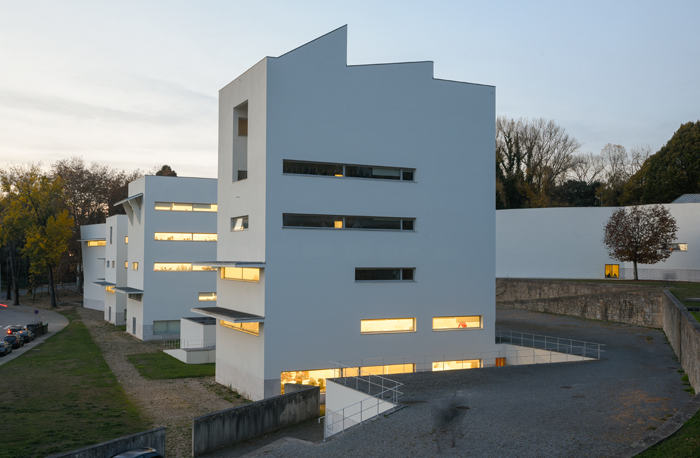
Faculdade de Arquitectura da Universidade do Porto

‘The Faculty of Architecture of the University of Porto (FAUP) works on a building designed by Álvaro Siza. “Porto school”, as it is internationally recognized, it’s a worldwide reference in Architecture graduation. On this institution, many awarded and published architects have studied and taught. Fernando Távora, Álvaro Siza, Nuno Portas, Alexandre Alves Costa, Domingos Tavares and Eduardo Souto Moura are some of the greatest examples of the pedagogic, scientific and artistic abilities of Porto school.’

by José Manuel Rodrigues, Director of FAUP master degree in Architecture

sigarra.up.pt/faup/pt/web_page.Inicial
Studios

Aires Mateus

Manuel Aires Mateus was born in Lisbon in 1963 and graduated from “Faculdade de Arquitectura / U.T.L” in 1986. He started collaborating with the Arch. Gonçalo Byrne in 1983 and started developing projects with his brother Francisco in 1988. The office Aires Mateus was then established independently by the two brothers although it was housed in Gonçalo Byrne’s studio in the first years.
The increasing scale of work made them establish a larger and autonomous space to fulfil the demands. Since then the scale and the amount of projects has been prolific, resulting in several national and international awards. The visibility of their work has made them being invited and accepting lecturing and teaching at several institutions. Among these are the Graduate School of Design in Harvard, The Accademia di Architettura in Mendrisio as well as several others in Portugal.
The structure right now spans through two studios both based in Lisbon, having several partnerships with local studios for international works.

airesmateus.com

Barbas Lopes

Barbas Lopes Arquitectos established their practice in 2006. Realised projects or under development include public and private buildings, single-family housing, exhibition designs, and interiors. The practice is also engaged in collaborations with architects such as Peter Märkli, Promontório Architects, Manuel Aires Mateus and Gonçalo Byrne.
Their work was nominated for Icon Awards 2012, Designs of the Year 2013 and Mies van der Rohe 2013.
They were Azrieli Visiting Critics in Residence at Carleton University, Ottawa, Canada.
Patrícia Barbas (Luanda, 1971) Graduated in Architecture at FAUTL, Lisbon. Collaborated with Aires Mateus, João Pedro Falcão de Campos and Atelier Pedro Silva Dias (Design). Project coordinator for Gonçalo Byrne (1998-2000) and Promontório Architects in Salvador da Bahia, Brazil (2005-2006). Guest Professor at Carleton University, Ottawa (2013, 2015-2016). Jury member of FAD Awards 2016.
Diogo Seixas Lopes (Lisbon, 1972-2016) Graduated in Architecture at FAUTL, Lisbon. Doctorate from ETH Zurich. Guest Professor at Carleton University, Ottawa (2013, 2015-2016) and DARQ.FCTUC (2011-2013). He was Director of the magazine Prototypo, Director and Chief Curator with André Tavares of JA-Jornal dos Arquitectos and Lisbon Architecture Triennale 2016. His publications include Cimêncio (Fenda Edições, 2001) with Nuno Cera and the book Melancholy and Architecture: On Aldo Rossi (Park Books, 2015). Posthumously, it was published the portuguese version of the book (Orfeu Negro, 2016) and awarded with the second prize of AICA 2016.

barbaslopes.com

Christian Kerez

Christian Kerez was born in 1962 in Maracaibo, Venezuela, educated at the Swiss Federal Institute of Technology Zurich and received a Masters in Architecture in 1988. He was a design architect in the office of Rudolf Fontana from 1991 to 1993. After extensive published work in the field of architectural photography, he opened his own architectural office in Zurich, Switzerland in 1993. Christian Kerez has been a visiting professor at the Swiss Federal Institute of Technology Zurich since 2001 and is appointed as Assistant professor in design and architecture since 2003. Further, he received the 1998 Swiss art scholarship.

kerez.ch

De Vylder Vinck Taillieu

In 2009 what was made permanent had already been foreseen. architecten de vylder vinck taillieu – a dvvt – is the new name under which Jan De Vylder, Inge Vinck and Jo Taillieu will further share their mutual appreciation, interest and previous realized work. Already long before each one of them, sometimes in collaboration with each other, steadily developed and realized a certain variety of projects. Since 2009 it is clear that the establishment of a dvvt has given wings to the united view on what architecture can possibly stand for.

architecten de vylder vinck taillieu wants to be complete. To embrace not only design but also the making; that is the point of departure for a dvvt. Only through understanding how something is created, design is able to play out its critical attitude. Within the landscape of present-day expectations, a dvvt unexpectedly wants to give these expectations an appropriate turn through which not only what is expected is granted, but surprisingly more can be found. A critical attitude; not as just a gesture but as a living instrument to arrive further than ever expected.

The social responsibility that is based within architecture should not be underestimated. But only if the architect audits this responsibility critically, this social task has the possibility to surpass a mere filling-in of expectations and obtains the chance to its cultural dimension. Here, the architect has a crucial responsibility. a dvvt wants to recognize this. The skill of the architect – the craft; the knowledge and the critical attitude – is crucial with this. This skill ensures that present-day expectations like cultural sustainability have the possibility to stand for more than what they stand for today. The métier as the key to the future.

Jan De Vylder (1968), Inge Vinck (1973) and Jo Taillieu (1971) all three are principle architects and business partners. But first and foremost architects. This was the point of departure for a dvvt. The actual effort for design and for realization stays paramount.

To keep doing this for every project and to keep further defining the appropriate effort together with the client in the course the entire process is of primary importance.

Although the above is written first the practice is just as much a strength of architecten de vylder vinck taillieu. Next to Jan De Vylder, Inge Vinck and Jo Taillieu, stands a strong and diverse team of sixteen collaborators. Collaborators who already from the start draw along with the first lines that were set out; and young collaborators who help giving further sharpness and speed to the élan a dvvt enjoys today.

architectenjdviv.com
Eduardo Castillo

Chile, 1972-2014. Before becoming an architect he was trained as a carpenter by his father. He studied architecture at the Pontificia Universidad Católica de Chile. He was working with Smiljan Radi? for ten years, and also with Germán del Sol and Teodoro Fernández. Castillo was a professor at the Universidad de Talca and run his own architectural practice. His work was published and exhibited in Germany, China, Spain, England, Italy, Japan and Mexico among others. He was invited to various events, lectures and international workshops by universities and architectural associations.

arqecastillo.blogspot.com

Emilio Marin

The studio was founded in 2005 by Emilio Marin. 2010 Juan Carlos Lopez entered as a partner. It specializes in various fields of contemporary architecture and has developed several projects for private clients as well as public. Emilio Marin is also founder of the independent editorial Public Library, which produces, designs and publishes its own material as well as others.
The office was recently selected by ICON magazine in a list of 20 architects in the world who are “building the future”.
The office follows an accurate line –not always straight, yet very precise- with unique and carefully designed projects, all of which very diverse amongst each other. They all compose a heterogeneous collection of work.
The last concluded project was for Archizines (a showcase of new architecture fanzines, journals and magazines from around the world curated by Elias Redstone in collaboration with the Architectural Association), designing and developing the exhibition in Santiago.
The office has now expanded its field of action and hopefully will build a Desert Research Center for a wind energy company at Northern Chile.
We are also interested in research, which we consider as a fundamental component of our design process and derive as a natural result of our concluded projects, as well as gives continuity to them. Most recently we have been investigating and implementing frugal architecture into our practice.

emiliomarin.cl

Ensamble

Ensamble Studio is a cross-functional team founded in 2000 and led by architects Antón García-Abril and Débora Mesa. Balancing imagination and reality, art and science, their work innovates typologies, technologies and methodologies to address issues as diverse as the construction of the landscape or the prefabrication of the house. From their early works –SGAE Headquarters, Hemeroscopium House or The Truffle in Spain– to their most recent –Ensamble Fabrica in Madrid and Ca’n Terra in Menorca, Spain–, every project makes space for experimentation aiming to advance their field. Currently, through their startup WoHo, they are invested in increasing the quality of architecture while making it more affordable by integrating offsite technologies. Their new research and fabrication facility in Madrid, Ensamble Fabrica, has been built to support this endeavor.
Antón and Débora are committed to sharing ideas and cultivating synergies between professional and academic worlds through teaching, lecturing and researching: she is Design Critic in Architecture at Harvard GSD and he is a Professor at MIT, where they co-founded the POPlab –?Prototypes of Prefabrication Laboratory?– in 2012.
Their contributions to the theory and practice of architecture have received numerous international recognitions, the latest ones being: the 2022 American Academy of Arts and Letters Award, the 2021 Marcus Prize, and the 2019 RIBA Charles Jencks Award.

ensamble.info

José Paulo dos Santos

José Paulo Dos Santos started studying engineering at the Faculty of Science and Technology of the University of Coimbra in Portugal before leaving to study architecture in England, at the Canterbury School of Architecture and then the Royal College of Arts, from where he graduated in 1981. He became an accredited teacher in Portugal in 1983. After a first internship with Alvaro Siza (1978-79) he worked in New York and then with Foster Associates between 1982 and 1984, the year in which he established his own office. Amongst his most recent projects: Guest House, Convent Loios in Arraiolos, 1996; houses in Covela, 2008; Conservatory of Music, Coimbra, 2011. J.P. Dos Santos has taught in (amongst other places) Germany, Slovenia, Italy, Switzerland (ETH Zurich) and Portugal.

josepaulodossantos.com

Nuno Valentim

Nuno Valentim, Arquitectura e Reabilitação is an architectural practice founded in 1997 in Porto. It has more than 150 projects of different scales, programmes and frameworks.
Among them are the Rehabilitation of the Andresen House/Gallery of Biodiversity and the Salabert House in the Botanical Garden of Porto, the expansion of the Lycée Français of Porto and the project of the Rehabilitation/Modernisation of the Bolhão Market.
His practice is attentive to the reality where it operates and to its physical and human analysis, where architecture is understood as an activity of synthesis between programme and context and the architect is recognised as an author and fundamental actor in the response to social, environmental and landscape needs.

nunovalentim.com

Office KGDVS

OFFICE is an architectural practice founded by Kersten Geers (1975) and David Van Severen (1978). Since its establishment in 2002 in Brussels, OFFICE has been committed to the idea of architecture as a cultural undertaking aimed at improving the human environment. To that end, we see the increasingly pressing topics of sustainability, responsible sourcing, or future use, as a catalyst for shaping our urban and social realm, and architectural form as part of the solution. OFFICE is a collaborative practice, bringing together our colleagues, developers and experts from various disciplines, in order to assure quality of every project.
OFFICE projects differ in scale and type, ranging from furniture to urban design. Recent projects currently under construction include Aerospacelab Megafactory in Charleroi, Belgium; Swiss Radio and Television building in Lausanne, Switzerland; and VRT Headquarters in Brussels, Belgium. This practice is combined with academic research and teaching, thus creating unexpected parallels between the two aspects of OFFICE’s production. Kersten Geers and David Van Severen together serve as Design Critics in Architecture at Harvard GSD, and Geers is a Full Professor at the Academy of Architecture USI, Mendrisio. They have previously taught at various institutions, including the Berlage Institute, TU Delft, Ghent University, Columbia University GSAPP, Yale School of Architecture and EPF Lausanne. This academic output is documented under the monicker Office Without Office.
Our international team comprises about 40 members, whose diverse backgrounds and knowledge contribute to the unique voice of OFFICE.
Since 2018, OFFICE is a partnership led by Kersten Geers, David Van Severen and Jan Lenaerts, together with associates Justine Rossillion, Alexander Smedts and Jacopo Lugli.

officekgdvs.com

Paulo Providência

Paulo Providência was born in Coimbra in 1962.
Educated at the Faculty of Architecture, University of Porto, 1989.
PhD, University of Coimbra, 2007.
Researcher at CES (Centre for Social Studies), University of Coimbra, Portugal.
His main professional work as architect is concerned about programmatic responses related to specific contexts: the Laundry of S. Nicolau (Porto 1992), the Renovation of S. Salvador de Figueiredo Church (Braga 1996-98), the Workshops for the Teatro Nacional S. João (Porto 2001-04), or the Medical Healthcare Centre (Vila do Conde 2001-05), are some examples of this aim. The Medical Center of Vila do Conde won the prize ENOR-Portugal 2007.
Beyond his activity as architect, he has written mainly about modernity. He’s the author of a study about hospital construction in XIXth century (A Cabana do Higienista, 2000), was co-editor of a guide on modern architecture in Porto (Porto 1901-2001, Guia de Arquitectura Moderna, 2001), as well as editor of a collection of theoretical writings by Georges Teyssot (Georges Teyssot Da teoria de arquitectura: doze ensaios, 2010). Recently he was guest-editor of “Crisscrossing Anthropology and Architecture” (Joelho #2, 2011) and “Teaching through Design” (Joelho #4, 2013).
He is Design Studio teacher at the Department of Architecture of the University of Coimbra, Portugal, and has been invited as Guest Critic at UCD (Dublin), SAUL (Limerick) and ETH (Zurich).

Ryan Kennihan

Ryan studied architecture at Cornell University. Originally from Chicago, he has been based in Dublin, Ireland since 2002, establishing his practice in 2007. He has taught architecture at University of Navarra in Pamplona, the Porto Academy, University College Dublin and the Dublin School of Architecture at TU Dublin where he is currently a lecturer. He also has a great team of collaborators.
Ryan is a registered architect with the Royal Institute of the Architects of Ireland and Grade 3 Accredited in Architectural Conservation.

rwka.com

Sergison Bates

Established in 1996, we started small: our first commission was for a public house in Walsall which won an award for the best new- build pub in 1999. This was the beginning of our interest in public architecture. Other interesting projects followed: a prototype for suburban housing in Stevenage – our first exploration of social housing, a studio house in Bethnal Green and the transformation of a former paint factory into a residential building.
Over the years our focus has expanded both geographically and typologically, and so has recognition of our work. We were awarded the Schelling Prize for Architecture and the Tessenow Gold Medal in 2006, and a number of RIBA awards and international prizes have followed.
Since the outset, we have engaged with the debate within the profession by lecturing and writing, and have curated a number of exhibitions about the themes we continue to explore in our projects: brickwork construction; affordable housing; the relationship between thinking and making; and teaching and practice.

sergisonbates.com/en

Tetsuo Kondo

Architect. Born in 1975 at Ehime. Graduated from Nagoya Institute of Technology in 1999. Worked at Kazuyo Sejima and Associates, SANAA from 1999 to 2006 and established Tetsuo Kondo Architects in 2006. Main projects include House with Gardens (Private house), Cloudscapes at 12th international architecture exhibition, la Biennale di Venezia, A Path in the Forest at European Capital of Culture 2011, Urban Installations Festival LIFT11, House in Chayagasaka (Private house) and 7ip (New House Shuppan, 2013), which is a publication featured House in Chayagasaka.

tetsuokondo.jp

Unulaunu

UNULAUNU (one to one ,-en) is Romina Grillo, Ciprian Rasoiu, Liviu Vasiu, Matei Vlasceanu and Tudor Vlasceanu. We first joined forces in 2010 driven by a simple wish of doing architecture and later we found enough commune and also conflictual points to convince us that we should work together. Besides own projects we enriched our experience working in offices like: OMA / Rem Koolhaas-Rotterdam / Hong Kong, Christian Kerez- Zürich and Valerio Olgiati – Chur, living and collaborating with studios from Paris, Dubai, Zürich, Oslo, Berlin, Bruxelles and Stuttgart.
Our first project was the competition and building of the national pavilion of Romania at the Biennale di Architettura of Venice 2010. The success at the prestigious exhibition and the fruitful collaboration gave us the opportunity to start an office. In the last years, we have been involved in more than 50 projects and competitions and we have concluded in building a few of them: the Venice Biennale, Aix en Province – installation, Pavilion O.
In 2014, UNULAUNU has been awarded the Weißenhof-Architekturförderpreis in Stuttgart, which has led to PERSPEKTIVEN, a solo exhibition presenting our work. 2014, brings our first academic collective studio at Porto Academy. Currently, as always, we invest effort in our ideas, ideas that stand at the very base of any architectural object.

cargocollective.com/unulaunu

Valerio Olgiati

Valerio Olgiati studied architecture at ETH Zurich. Having lived and worked first in Zurich and later in Los Angeles for some years, he opened his own practice in Zurich in 1996 and then in 2008 together with his wife Tamara Olgiati in Flims.
The first time he received attention outside the architectural scene was in 1999, with the museum The Yellow House in Flims, Switzerland. His most recent work is a residential building in Zug, Switzerland: a 120 m long red-brown concrete structure. He created an icon with his 2008 winning competition for the Museum of Contemporary Art in Perm, Russia.
There are several monographs about his work. The most recent solo exhibition was at MoMa Tokyo in the winter of 2011/12.
Among other academic engagements, in 2009 he led the Kenzo Tange Chair at Harvard University, Cambridge. Since 2002 he has been a Full Professor at the Accademia di architettura Mendrisio at the Università della Svizzera italiana.

olgiati.net
Professors

Antón García-Abril

Antón García-Abril is a European Licensed Architect and a registered architect in the Commonwealth of Massachusetts. He established Ensamble Studio in 2000 and has co-founded WoHo in 2020. He has dedicated his career to innovating typologies, technologies, and methodologies, advancing the fields of architecture and construction through works that are internationally recognized. Together with his partner Debora Mesa, he has progressively redefined the role of the architect, adding to his design competencies those from the developer, the contractor, the fabricator and the inventor. García-Abril is full-professor at the School of Architecture and Planning of the Massachusetts Institute of Technology (MIT) since 2012, where he co-founded the POPlab that same year. He received the Spanish Academy Research Prize in Rome in 1996 holds a doctorate degree from the Polytechnic University of Madrid.

ensamble.info

Christian Kerez

Christian Kerez was born in 1962 in Maracaibo, Venezuela, educated at the Swiss Federal Institute of Technology Zurich and received a Masters in Architecture in 1988. He was a design architect in the office of Rudolf Fontana from 1991 to 1993. After extensive published work in the field of architectural photography, he opened his own architectural office in Zurich, Switzerland in 1993. Christian Kerez has been a visiting professor at the Swiss Federal Institute of Technology Zurich since 2001 and is appointed as Assistant professor in design and architecture since 2003. Further, he received the 1998 Swiss art scholarship.

kerez.ch

Diogo Seixas Lopes

Lisbon, 1972-2016. Graduated in Architecture at FAUTL, Lisbon. Doctorate from ETH Zurich. Guest Professor at Carleton University, Ottawa (2013, 2015-2016) and DARQ.FCTUC (2011-2013). He was Director of the magazine Prototypo, Director and Chief Curator with André Tavares of JA-Jornal dos Arquitectos and Lisbon Architecture Triennale 2016. His publications include Cimêncio (Fenda Edições, 2001) with Nuno Cera and the book Melancholy and Architecture: On Aldo Rossi (Park Books, 2015). Posthumously, it was published the portuguese version of the book (Orfeu Negro, 2016) and awarded with the second prize of AICA 2016.

Barbas Lopes Arquitectos established their practice in 2006. Realised projects or under development include public and private buildings, single-family housing, exhibition designs, and interiors. The practice is also engaged in collaborations with architects such as Peter Märkli, Promontório Architects, Manuel Aires Mateus and Gonçalo Byrne. Their work was nominated for Icon Awards 2012, Designs of the Year 2013 and Mies van der Rohe 2013. They were Azrieli Visiting Critics in Residence at Carleton University, Ottawa, Canada.

barbaslopes.com

Eduardo Castillo

Chile, 1972-2014. Before becoming an architect he was trained as a carpenter by his father. He studied architecture at the Pontificia Universidad Católica de Chile. He was working with Smiljan Radi? for ten years, and also with Germán del Sol and Teodoro Fernández. Castillo was a professor at the Universidad de Talca and run his own architectural practice. His work was published and exhibited in Germany, China, Spain, England, Italy, Japan and Mexico among others. He was invited to various events, lectures and international workshops by universities and architectural associations.

arqecastillo.blogspot.com

Emilio Marin

The studio was founded in 2005 by Emilio Marin. 2010 Juan Carlos Lopez entered as a partner. It specializes in various fields of contemporary architecture and has developed several projects for private clients as well as public. Emilio Marin is also founder of the independent editorial Public Library, which produces, designs and publishes its own material as well as others.
The office was recently selected by ICON magazine in a list of 20 architects in the world who are “building the future”.
The office follows an accurate line –not always straight, yet very precise- with unique and carefully designed projects, all of which very diverse amongst each other. They all compose a heterogeneous collection of work.
The last concluded project was for Archizines (a showcase of new architecture fanzines, journals and magazines from around the world curated by Elias Redstone in collaboration with the Architectural Association), designing and developing the exhibition in Santiago.
The office has now expanded its field of action and hopefully will build a Desert Research Center for a wind energy company at Northern Chile.
We are also interested in research, which we consider as a fundamental component of our design process and derive as a natural result of our concluded projects, as well as gives continuity to them. Most recently we have been investigating and implementing frugal architecture into our practice.

emiliomarin.cl

Jan De Vylder

Born in 1968 in Belgium, Jan de Vylder graduated in Architecture from Sint-Lucas University in Ghent. He has been working independently since 2000, first sharing the studio with Trice Hofkens, then with Inge Vinck and Jo Taillieu, with whom in 2010 he founded the studio “Architecten de vylder vinck taillieu” operating until 2019. In the same year he founded, together with Inge Vink, the studio “Architecten jan de vylder inge vink”. He was professor at the “Sint-Lucas School for Architecture” in Brussels, at the “TU” in Delft, at the “EPFL” in Lausanne and at the Mendrisio Academy of Architecture; since 2017 he is professor at ETH in Zurich. Architect Inge Vink, born in 1973 in Belgium, has been teaching at the “Ecole Nationale Supérieure d’Architecture et de Paysage” in Lille and at the “TU” institute in Delft since 2011. Studio “Architectende vylder vinck taillieu” has been featured with its projects in many national and international books and magazines and it has been invited to important international events such as various editions of the Venice Biennale, Chicago, Lisbon and São Paulo and their work has been exhibited in numerous galleries including “Maniera” in Belgium, “Friedman Benda” USA and “Toto Ma” in Japan. They have received several awards including “La Biennale di Venezia Silver Lion” (2018), “Henry Van De Velde” Award (2018), shortlisted at the “Mies Van Der Rohe Award” (2016) and “Schelling Architekturpreis Award” (2016).

architectenjdviv.com

Jonathan Sergison

Based in the Zurich office, Jonathan is responsible for the leadership and creative formation of the Swiss studio. He is involved in client liaison and all stages of project development. He is jointly responsible for the design direction of the practice.
He graduated from the Architectural Association School of Architecture in 1989 and gained professional experience working for David Chipperfield and Tony Fretton.
Jonathan has taught at a number of schools of architecture, including the University of North London, the Architectural Association in London, was Visiting Professor at the Swiss Federal Institute of Technology (ETH) in Zurich, the Ecole Polytechnique Fédérale in Lausanne (EPFL), the Oslo School of Architecture and Design and the Harvard University Graduate School of Design. Since 2008 he has been Professor of Design and Construction at the Accademia di Mendrisio, Switzerland, and in 2019 became Director of the newly established Istituto di Studi Urbani e del Paesaggio (ISUP, Institute of Urban and Landscape Studies).
He is particularly interested in urban questions and the changing conditions of the contemporary European city. More specifically, he has addressed through writing, teaching and practice the role housing might play in this changing context.
He regularly writes and lectures, attends reviews in schools of architecture and competition juries.

sergisonbates.com/en

José Paulo dos Santos

José Paulo Dos Santos started studying engineering at the Faculty of Science and Technology of the University of Coimbra in Portugal before leaving to study architecture in England, at the Canterbury School of Architecture and then the Royal College of Arts, from where he graduated in 1981. He became an accredited teacher in Portugal in 1983. After a first internship with Alvaro Siza (1978-79) he worked in New York and then with Foster Associates between 1982 and 1984, the year in which he established his own office. Amongst his most recent projects: Guest House, Convent Loios in Arraiolos, 1996; houses in Covela, 2008; Conservatory of Music, Coimbra, 2011. J.P. Dos Santos has taught in (amongst other places) Germany, Slovenia, Italy, Switzerland (ETH Zurich) and Portugal.

josepaulodossantos.com

Kersten Geers

Graduated in Architecture and Urbanism at the University of Ghent and at the ETSA Madrid. He worked with Maxwan Architects and Urbanists and with Neutelings Riedijk Architects in Rotterdam. Kersten Geers has been teaching at various institutions, such as the Berlage Institute, Columbia University GSAPP, Yale School of Architecture and EPF Lausanne. He currently holds a professorship at the Academy of Architecture in Mendrisio, and the Kenzo Tange chair at Harvard GSD. He is a founding member of the architecture magazine San Rocco.
OFFICE Kersten Geers David Van Severen was founded in 2002 by Kersten Geers and David Van Severen. OFFICE is renowned for its idiosyncratic architecture, in which realisations and theoretical projects stand side by side. The projects are direct, spatial and firmly rooted in architectural theory. The firm reduces architecture to its very essence and most original form: a limited set of basic geometric rules is used to create a framework within which life unfolds out in all its complexity.
Since its establishment OFFICE Kersten Geers David Van Severen has earned a reputation as one of Belgium’s most successful and renowned practices, and one of the world’s truly original voices in present-day architecture. OFFICE engages in all architectural and urbanist design, creating projects of all scales ranging from furniture to masterplanning in Belgium as well as internationally. This practice is combined with academic research and teaching. These two aspects of OFFICE’s work are explicitly each other’s mirror, creating unexpected parallels between academic and practical work.

officekgdvs.com

Liviu Vasiu

Romina Grillo and Liviu Vasiu graduated at Accademia di Architettura Mendrisio in Switzerland. They have worked in different offices like Valerio Olgiati in Flims and OMA -Rem Koolhaas in Rotterdam. Since 2010 they work independently by developing different projects, initially inside the collective UNULAUNU, and now as founders of the studio GRILLOVASIU. The national Romanian pavilion for the 2010 Venice biennale was their first build project, since then, they are in the realisation and participation of international projects, exhibitions, lectures and publications. Next to their professional activity Grillo and Vasiu are constantly involved in the academic world, teaching in prestigious universities such as Accademia di Architettura Mendrisio, ETH – Zu?rich, AHO Oslo and Porto Academy.

grillovasiu.com

Manuel Aires Mateus

Manuel Aires Mateus was born in Lisbon in 1963 and graduated from “Faculdade de Arquitectura / U.T.L” in 1986. He started collaborating with the Arch. Gonçalo Byrne in 1983 and started developing projects with his brother Francisco in 1988. The office Aires Mateus was then established independently by the two brothers although it was housed in Gonçalo Byrne’s studio in the first years. The increasing scale of work made them establish a larger and autonomous space to fulfil the demands. Since then the scale and the amount of projects has been prolific, resulting in several national and international awards. The visibility of their work has made them being invited and accepting lecturing and teaching at several institutions. Among these are the Graduate School of Design in Harvard, The Accademia di Architettura in Mendrisio as well as several others in Portugal. The structure right now spans through two studios both based in Lisbon, having several partnerships with local studios for international works.

airesmateus.com

Nuno Valentim

Degree in Architecture at FAUP, Faculty of Architecture of the University of Porto (1995). Master in Rehabilitation of Architectural Heritage/Patrimony at FEUP, Faculty of Engineering of the University of Porto (2007).
Started independent professional practice in 1994 and collaborated with José Gigante from 1995 to 2004.
Assistant Professor at FAUP since 2005 where is presently elaborating his PhD thesis in Architectural Rehabilitation.
Author (with others) of “Support Manual to the Project of Rehabilitation of Old Buildings’” coordinated by Prof. Vasco Peixoto de Freitas, published in May 2012.
He is prfoessor at FAUP since 2005.

nunovalentim.com

Patrícia Barbas

Luanda, 1971. Graduated in Architecture at FAUTL, Lisbon.
Collaborated with Aires Mateus, João Pedro Falcão de Campos and Atelier Pedro Silva Dias (Design). Project coordinator for Gonçalo Byrne (1998-2000) and Promontório Architects in Salvador da Bahia, Brazil (2005-2006).
Guest Professor at Carleton University, Ottawa (2013, 2015-2016). Jury member of FAD Awards 2016.
Barbas Lopes Arquitectos established their practice in 2006. Realised projects or under development include public and private buildings, single-family housing, exhibition designs, and interiors. The practice is also engaged in collaborations with architects such as Peter Märkli, Promontório Architects, Manuel Aires Mateus and Gonçalo Byrne. Their work was nominated for Icon Awards 2012, Designs of the Year 2013 and Mies van der Rohe 2013. They were Azrieli Visiting Critics in Residence at Carleton University, Ottawa, Canada.

barbaslopes.com

Paulo Providência

Paulo Providência was born in Coimbra in 1962.
Educated at the Faculty of Architecture, University of Porto, 1989.
PhD, University of Coimbra, 2007.
Researcher at CES (Centre for Social Studies), University of Coimbra, Portugal.
His main professional work as architect is concerned about programmatic responses related to specific contexts: the Laundry of S. Nicolau (Porto 1992), the Renovation of S. Salvador de Figueiredo Church (Braga 1996-98), the Workshops for the Teatro Nacional S. João (Porto 2001-04), or the Medical Healthcare Centre (Vila do Conde 2001-05), are some examples of this aim. The Medical Center of Vila do Conde won the prize ENOR-Portugal 2007.
Beyond his activity as architect, he has written mainly about modernity. He’s the author of a study about hospital construction in XIXth century (A Cabana do Higienista, 2000), was co-editor of a guide on modern architecture in Porto (Porto 1901-2001, Guia de Arquitectura Moderna, 2001), as well as editor of a collection of theoretical writings by Georges Teyssot (Georges Teyssot Da teoria de arquitectura: doze ensaios, 2010). Recently he was guest-editor of “Crisscrossing Anthropology and Architecture” (Joelho #2, 2011) and “Teaching through Design” (Joelho #4, 2013).
He is Design Studio teacher at the Department of Architecture of the University of Coimbra, Portugal, and has been invited as Guest Critic at UCD (Dublin), SAUL (Limerick) and ETH (Zurich).

Romina Grillo

Romina Grillo and Liviu Vasiu graduated at Accademia di Architettura Mendrisio in Switzerland. They have worked in different offices like Valerio Olgiati in Flims and OMA -Rem Koolhaas in Rotterdam. Since 2010 they work independently by developing different projects, initially inside the collective UNULAUNU, and now as founders of the studio GRILLOVASIU. The national Romanian pavilion for the 2010 Venice biennale was their first build project, since then, they are in the realisation and participation of international projects, exhibitions, lectures and publications. Next to their professional activity Grillo and Vasiu are constantly involved in the academic world, teaching in prestigious universities such as Accademia di Architettura Mendrisio, ETH – Zu?rich, AHO Oslo and Porto Academy.

grillovasiu.com

Ryan Kennihan

Ryan studied architecture at Cornell University. Originally from Chicago, he has been based in Dublin, Ireland since 2002, establishing his practice in 2007. He has taught architecture at University of Navarra in Pamplona, the Porto Academy, University College Dublin and the Dublin School of Architecture at TU Dublin where he is currently a lecturer. He also has a great team of collaborators.
Ryan is a registered architect with the Royal Institute of the Architects of Ireland and Grade 3 Accredited in Architectural Conservation.

rwka.com

Tetsuo Kondo

Architect. Born in 1975 at Ehime. Graduated from Nagoya Institute of Technology in 1999. Worked at Kazuyo Sejima and Associates, SANAA from 1999 to 2006 and established Tetsuo Kondo Architects in 2006. Main projects include House with Gardens (Private house), Cloudscapes at 12th international architecture exhibition, la Biennale di Venezia, A Path in the Forest at European Capital of Culture 2011, Urban Installations Festival LIFT11, House in Chayagasaka (Private house) and 7ip (New House Shuppan, 2013), which is a publication featured House in Chayagasaka.

tetsuokondo.jp

Tudor Vlasceanu

Tudor Vl?sceanu (b. 1981) studied architecture at the Technical University Cluj, University of Architecture and Urbanism “Ion Mincu” Bucharest and at the Technical University Delft. From 2007, he worked for OMA – Rem Koolhaas and since 2009, he started running his own projects, either individually or through collaborations. Over the years, Tudor has lived and worked in Berlin, Oslo, Dubai, Rotterdam and later Bucharest, where he co-founded TEGMARK, a visualization company and where, since 2020, he has started his own architectural practice.
The first completed project was the Romanian Pavilion at the 12th Venice Biennale curated by Kazuyo Sejima, a competition won with the collective UNULAUNU. Other important projects are House G – a rammed earth house near Bucharest, the New Urban Center for Triennale Milano and the Embassy of Kuwait in Bucharest – invited competitions, “A Big Table” – exhibition design for Romanian Design Week and the extension of a school in Davos, Switzerland. Currently, Tudor is working on a project for the Headquarters of a tech company, which will be completed in 2022.
At the same time, Tudor was part of various international exhibitions, publications and workshops and he has been involved in the academic field, guest teaching at University of Architecture and Urbanism “Ion Mincu”, University of Kassel, Peter Behrens School of Arts, Düsseldorf and Porto Academy.

tudorvlasceanu.com

Valerio Olgiati

Valerio Olgiati studied architecture at ETH Zurich. Having lived and worked first in Zurich and later in Los Angeles for some years, he opened his own practice in Zurich in 1996 and then in 2008 together with his wife Tamara Olgiati in Flims.
The first time he received attention outside the architectural scene was in 1999, with the museum The Yellow House in Flims, Switzerland. His most recent work is a residential building in Zug, Switzerland: a 120 m long red-brown concrete structure. He created an icon with his 2008 winning competition for the Museum of Contemporary Art in Perm, Russia.
There are several monographs about his work. The most recent solo exhibition was at MoMa Tokyo in the winter of 2011/12.
Among other academic engagements, in 2009 he led the Kenzo Tange Chair at Harvard University, Cambridge. Since 2002 he has been a Full Professor at the Accademia di architettura Mendrisio at the Università della Svizzera italiana.

olgiati.net
Assistants

Filipa Araújo

Filipe Madeira

Born in the ’80s, Filipe Madeira graduated in architecture at the University of Coimbra (Department of Architecture-FCTUC).
Filipe worked at Figueiredo+Pena (2013-19), and with Paulo Providência (2014-). He was a Visiting Assistant Professor in the Department of Architecture at the University of Coimbra between 2021 and 2024. He has been a PhD student at FAUP since 2024.
He has been co-authoring with Vânia Saraiva projects since 2014, with experience in public and private initiative projects in several countries – Portugal, Switzerland, USA and France. They established themselves as the independent practice FMVS in 2019, in Porto.

fmvs.pt

Francisca Marques

Gisela Lameira

Gisela Lameira is an architect and an Assistant Researcher of the Center for Studies in Architecture and Urbanism (CEAU), Faculty of Architecture, University of Porto (FAUP). She teaches on the Doctoral Programme in Architecture (PDA/FAUP) and is also a member of the Scientific Committee of the Integrated Master’s in Architecture (MIARQ/ FAUP). Her PhD in Architecture (FAUP, 2017) focused on multi-family housing models in Portugal.

Hugo Barros Ferreira

Graduated in Architecture at FAUP (Faculdade de Arquitectura da Universidade do Porto).

Between 2011 and 2012 studied at Accademia de Architectura di Mendrisio in Switzerland.

Between 2012 and 2013 worked at David Chipperfield Architects in London.

Founded the architecture platform built with Pedro Bragança in 2013.

Founded the practice ATELIERDACOSTA in 2015, sharing the studio with Pedro Matos.

atelierdacosta.com

João Salsa

Luca Bosco

Luís Loureiro

Margarida Quintã

Margarida Quintã (Porto, 1981) holds a degree in architecture from the Faculty of Architecture of the University of Porto (2007), and a doctorate with Distinction and Honors from the Instituto Superior Técnico in Lisbon and the École Polytechnique Fédérale de Lausanne (2019).
Margarida’s doctoral thesis, Modern Schools in Angola, 1961–1975: Design with Climate and Heritage, examines the climatic performance of Angolan architecture during the last years of Portuguese colonial rule. Through a detailed critical analysis of the passive systems of environmental control developed for the most intrinsically tropical of modern architectures, Margarida’s work demonstrates the symbiotic relationship between the problematics of climate responsiveness and environmental comfort.

ursa.com.pt

Maria Souto de Moura

Maria Souto de Moura (b. 1990, Portugal) is an architect and visual artist based in Porto. She graduated in Architecture from the Faculty of Architecture of the University of Porto (FAUP) in 2014, where she was awarded the Viana de Lima Prize – Architecture. Since 2022, she has been teaching as a guest assistant in the Project 4 course at FAUP. Currently, she is pursuing a Master’s in Painting at the Faculty of Fine Arts of the University of Porto (FBAUP). Between 2014 and 2023, she collaborated with Álvaro Siza’s studio, where she was responsible for significant projects including the Fundação Gramaxo, Joan Miró: Materiality and Metamorphosis, and the Álvaro Siza Wing of the Serralves Museum. Her independent architectural work includes the 1st Prize-winning project for Affordable Housing in Lordelo do Ouro, Porto (2021), in co-authorship. Since 2017, Maria has also developed a parallel visual art practice through her studio – maria souto de moura studio – exhibiting in group shows such as Arte na Leira (Caminha, since 2018), Nó at Galeria Cisterna (Lisbon, 2019), JustMad Art Fair (Madrid, 2020), I think I made you up at Plato (Évora, 2022), and 30 anos depois… at Galeria Fernando Santos (Porto, 2023). In 2017, she was selected for the national showcase Jovens Criadores with the pavilion Contemplação Particular, a collaboration with painter António Gonçalves, presented at the CCB, Lisbon. Maria is a co-founder of fr-ia, where she currently develops her professional practice, integrating architecture and visual art.

fr-ia.pt

Marisa Oliveira

Nuno Travasso

Rita Leite

Rita Machado Lima

Sérgio Catumba

Partners

Indexnewspaper

Indexnewspaper is a magazine of architecture printed in newspaper paper.
The editorial contains an interview, a visit to an office, projects and works, and essays. The front cover has an ” artwork ” designed by an invited artist.
Since 2012 Indexnewspaper has been part of several worldwide events related to publishing and editorial design.
Indexnewspaper was awarded with the prize Clube de Criativos de Portugal 2012 for editorial design and selected for the collection of the library of MOMA in New York.
Alongside with the regular edition, Indexnewspaper published special editions and the edition of books. Indexnewspaper has also organized conferences, exhibitions, and workshops.
For us, Index is “the finest newspaper”.

indexnewspaper.info

Indexshop

Indexshop presents you an ongoing independent selection of books and objects of architects, artists and designers. It is also the Indexnewspaper and Porto Academy official store.

Beyond its curatorial vocation, Indexshop is increasingly committed to supporting architectural practice by supplying studios with a carefully selected range of architectural hardware and project-specific solutions.

indexshop.info

Ivo Tavares Studio

Ivo Tavares Studio is a photography studio specialized in architecture, dedicated to creating images that capture the essence of spaces.

With an approach that combines documentary rigor and artistic sensitivity, the studio works closely with architects, designers, and institutions, contributing to the communication and appreciation of their projects.

The practice of the studio is built on two main pillars: the observation of light as a structuring element of the image and the pursuit of visual narratives that go beyond mere documentation. Each photograph seeks not only to record a building but also to convey the atmosphere, the experience, and the impact of the space on its urban or natural surroundings.

Over the years, Ivo Tavares Studio has consolidated its presence in the national scene, with projects widely published in leading international magazines and platforms. Its work aims not only to promote contemporary architecture but also to expand its cultural reach, strengthening the visibility of Portuguese architectural production worldwide.

ivotavares.net
Sponsors

PANORAMAH!

With surfaces above 98% structural glass, minimalist windows are all about glazing. From an industrial point of view, more significant glass dimensions require larger tempering furnaces, smooth operability and technical performances impose precision and higher quality standards, often more demanding than defined by international glass processing norms.
To keep up with new challenges, panoramah! verticalized its industrial activity and integrated glass transformation in 2011. Continuously investing in its transformation capacity ever since, it became one of the largest glass transformers in Europe with a 9-metre furnace and the ability to process double- and triple-glazed units up to 29 sqm. This capacity has proved critical in different processes, mainly as glass progressively absorbs new functions, admits irregular and curved shapes or assumes various aesthetic requirements.
panoramah! is currently the only manufacturer of minimalist windows in the world that processes and manufactures the main components of its systems, having full control and accountability over the entire process. From design to manufacture and installation, we answer for the complete system, both glass and aluminium. We streamlined glass transformation, adaptation to the system and transportation to the job site, rendering an apparently risky and complex procedure into an everyday job.
Furthermore, with built experience in over 60 different countries and a strong network of more than 50 certified specialized partners, panoramah! is effectively present throughout the globe. Supported by our team, this network is composed by fully experienced technicians that ensure a constant presence at all stages, from glazing consulting to installation and long-term maintenance.

panoramah.com
This website uses cookies to ensure you get the best experience. Please read our Privacy Policy. Ok